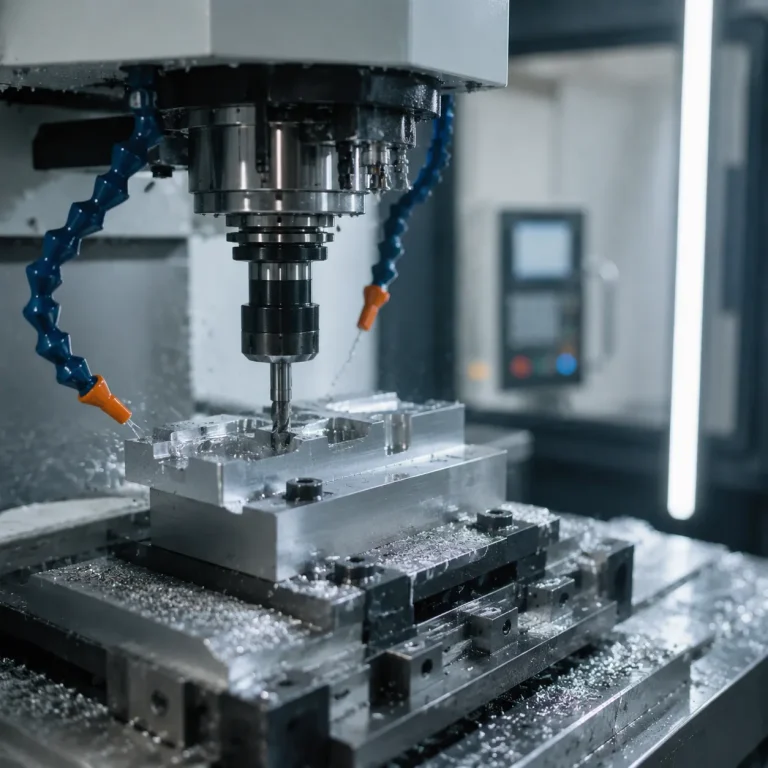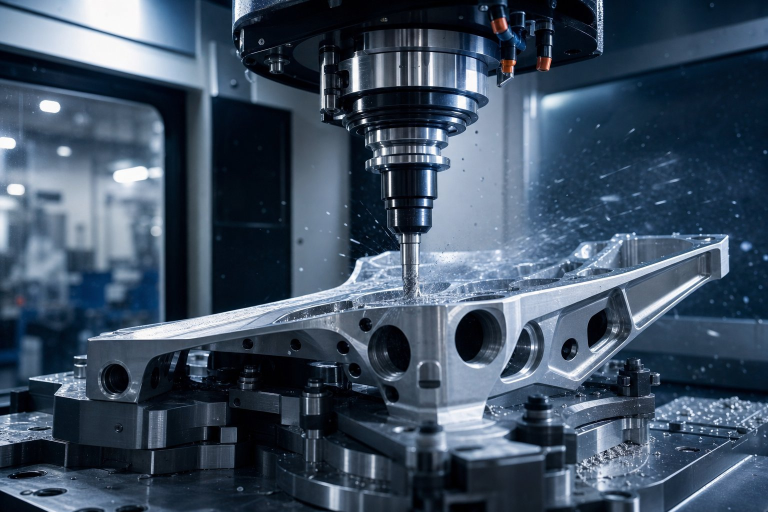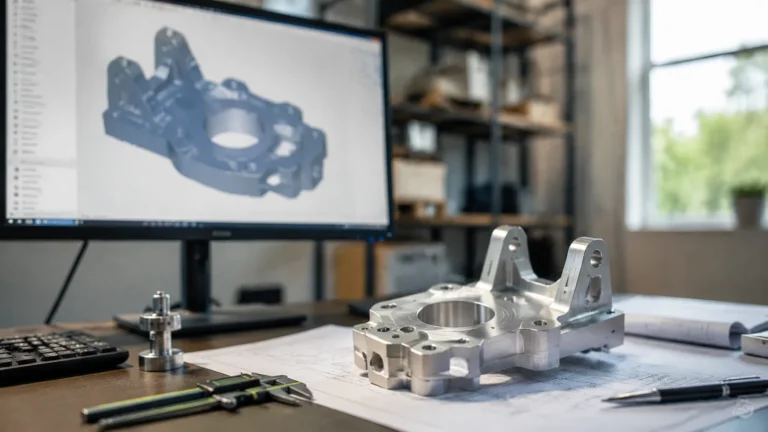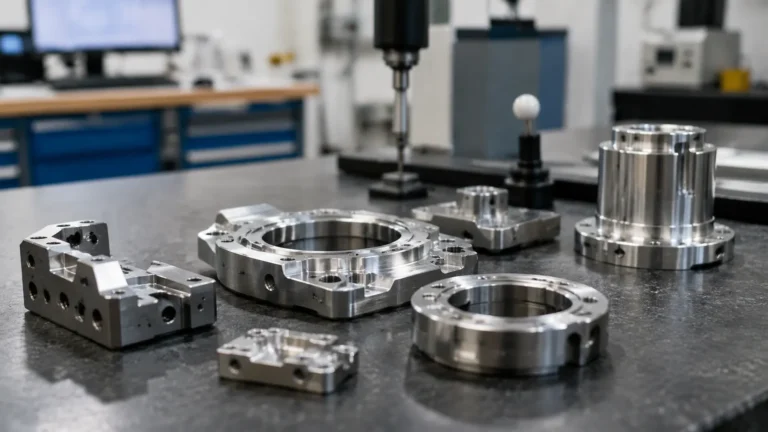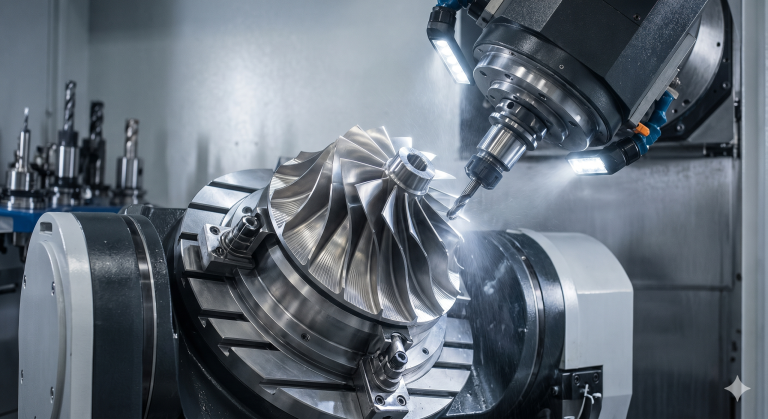
AI for CNC Machining How AI Transforms Programming and Produ
AI for CNC Machining: How Futuristic Technologies Enhance Programming and Production
Why AI Matters Now in CNC Machining
Traditional manufacturing has long relied on a linear, manual workflow:
- CAD Modeling: Designing the physical part in 3D software.
- CAM Programming: Manually defining toolpaths and cutting parameters.
- G-code Generation: Translating those toolpaths into machine instructions.
- Machining: Executing the program on CNC mills or lathes.
- Inspection: Measuring the finished part to verify accuracy.
While this conventional process works, it is prone to significant bottlenecks. Manual toolpath creation requires extensive trial-and-error, and production success often depends entirely on the intuition of individual operators. This reliance on manual input slows down quoting, increases programming lead times, and introduces human error into quality control.
Breaking Manufacturing Bottlenecks with Intelligent Automation
Artificial intelligence reshapes this dynamic by introducing data-driven decisions and automating repetitive tasks. By shifting from manual setups to smart, algorithmic workflows, we achieve:
- Automated Design Analysis: Instantly identifying hard-to-machine features before cutting begins.
- Optimized Toolpath Generation: Reducing cycle times and minimizing tool wear automatically.
- Consistent Precision: Eliminating human error to reliably hit tight tolerances up to ±0.005 mm.
At cncxf, we pair our 20+ years of precision manufacturing experience with digital transformation. By integrating advanced data workflows into our ISO 9001:2015 certified production processes, we streamline everything from CNC turning to 5-axis machining. This digital-first approach allows us to deliver standard 3-day lead times on parts ranging from 10 mm x 10 mm to 200 mm x 200 mm, ensuring speed without sacrificing quality.
Understanding the Core AI Technologies Behind Modern CNC
We are moving past traditional, rigid programming. To truly understand how AI for CNC Machining: How Futuristic Technologies Enhance Programming and Production operates on our shop floor, we have to look at the core software and hardware technologies driving this shift. We integrate these tools directly into our workflow to turn raw data into perfect parts.
Machine Learning and Data-Driven Optimization
At cncxf, we use machine learning in manufacturing to eliminate guesswork. Instead of relying solely on a machinist’s intuition, our systems analyze historical cutting data, material behavior, and tool wear rates.
- Pattern Recognition: The software identifies optimal cutting speeds based on thousands of previous successful jobs.
- Continuous Improvement: Every part we cut feeds data back into the system, making the next production run faster and more efficient.
- Predictive Adjustments: The system flags potential errors before the machine even starts moving.
Computer Vision and Intelligent Inspection
Quality control is no longer just a post-machining step. By deploying computer vision inspection for machining, we monitor the manufacturing process in real time.
| Technology Component | Operational Benefit |
|---|---|
| High-Resolution Cameras | Track surface finishes continuously during the cut. |
| AI Defect Detection | Instantly spots micro-cracks, burrs, or dimensional deviations. |
| Automated Sorting | Separates out-of-tolerance parts without human intervention. |
Smart Algorithms in CAM Software and Controllers
The bridge between design and production relies heavily on intelligent CAM software. Modern AI controllers read CAD models differently than old systems did. They don’t just calculate lines; they understand geometry.
Our smart algorithms automatically adapt toolpaths on the fly to maintain constant tool load. This eliminates sudden spikes in stress, extends tool life, and ensures we hit advanced CNC machining with tight tolerances every single time. By combining these algorithms with our physical controllers, we react to real-time cutting conditions in milliseconds.
AI in the Pre-Machining Stage: Faster Quoting and Better DFM
The traditional quoting process for custom parts used to take days of manual calculations and back-and-forth emails. By integrating AI for CNC Machining: How Futuristic Technologies Enhance Programming and Production into our front-end workflow, we have eliminated these bottlenecks. We use intelligent algorithms to analyze designs instantly, moving projects from the screen to the shop floor faster than ever.
Automated CAD Analysis and Instant Quoting
When you upload your CAD files to our platform, our automated systems immediately evaluate the geometry, volume, and complexity of your parts. This digital workflow allows us to provide rapid pricing and design feedback.
- Instant Pricing: No more waiting days for manual estimations.
- Size Compatibility: Optimized for standard components from 10 mm x 10 mm up to 200 mm x 200 mm.
- Fast Lead Times: Eligible parts move directly into production with our standard 3-day lead time.
| Quoting Step | Traditional Method | Our AI-Driven Workflow |
|---|---|---|
| Turnaround Time | 24 to 48 hours | Instant automated analysis |
| Cost Estimation | Manual spreadsheet calculations | Real-time algorithmic pricing |
| Error Detection | Human visual inspection | Automated geometric feature recognition |
AI-Assisted Design for Manufacturability (DFM)
Before we cut any raw material, our automated DFM analysis scans your 3D models for potential manufacturing issues. This proactive engineering feedback identifies thin walls, deep pockets, or incompatible features that could lead to assembly errors.
- Tolerance Verification: The system flags areas that require ultra-tight tolerances up to ±0.005 mm.
- Material Compatibility: The algorithms cross-reference your design against our database of 50+ materials and finishes to ensure optimal toolpath execution.
- Risk Reduction: Catching design flaws digitally prevents costly scrap and production delays.
AI for CNC Machining: How Futuristic Technologies Enhance Programming and Production
Automated Feature Recognition and G-Code Generation
We are shifting away from manual programming. By integrating AI-powered CNC programming, our system automatically analyzes CAD models, identifies geometric features like pockets, holes, or slots, and instantly generates precise G-code. This eliminates human error and slashes setup times from hours to minutes.
Optimizing 3- and 5-Axis Machining at cncxf
Complex geometries require advanced tool movements. We leverage AI in 5-axis machining alongside traditional 3-axis setups to dynamically calculate the most efficient tool paths. The software continuously adapts to prevent collisions, minimize tool retraction, and maintain optimal engagement with the material.
| Machining Type | Traditional Approach | AI-Optimized Approach (cncxf) |
|---|---|---|
| 3-Axis Machining | Fixed step-overs, uniform speeds | Dynamic feed rates, smart toolpath optimization |
| 5-Axis Machining | Manual collision checking, rigid paths | Real-time predictive collision avoidance, fluid motion |
Intelligent Tool Selection and Cutting Parameters
Choosing the wrong tool or incorrect feed rate ruins parts and breaks cutters. Our intelligent CAM software uses machine learning to match the specific material with the perfect cutting tool and parameters.
- Adaptive Feed Rates: Automatically adjusts speeds based on material density and tool wear.
- Optimal Tool Selection: Picks the best tool geometry to achieve advanced CNC machining with tight tolerances.
- Extended Tool Life: Minimizes heat buildup and vibration, ensuring consistent surface finishes across the entire production run.
AI on the Shop Floor: Real-Time Monitoring and Adaptive Production
We are moving past the days of setting up a machine, pressing start, and simply hoping for the best. On our shop floor, AI for CNC Machining: How Futuristic Technologies Enhance Programming and Production translates into live, smart adjustments during the physical cutting process.
Sensor-Based Monitoring and Adaptive Control
Our machines use adaptive CNC control systems to listen and feel what is happening at the cutting tool in real time. Acoustic, vibration, and thermal sensors feed data directly into the AI core.
- Micro-Second Adjustments: If the system detects an unexpected hard spot in the metal, it automatically adjusts feed rates to prevent tool breakage.
- Surface Finish Optimization: Real-time tweaks eliminate chatter before it marks the part.
- Scrap Reduction: The system pauses the cycle instantly if a tool chips, saving raw material and keeping your project on track.
Predictive Maintenance for CNC Equipment
Unplanned downtime ruins lead times. By deploying predictive maintenance for CNC machines, we track the health of spindles, bearings, and axes before a breakdown occurs.
| Metric Monitored | AI Analysis | Benefit to Customer |
|---|---|---|
| Spindle Vibration | Detects micro-wear patterns | Prevents sudden machine failure |
| Thermal Expansion | Adjusts axis compensation | Maintains tight tolerances |
| Coolant Quality | Tracks degradation levels | Ensures optimal cutting conditions |
AI-Driven Production Scheduling and Resource Allocation
Shop schedules are dynamic variables. We use data-driven production scheduling to balance workloads across our multi-axis machines instantly.
When a rush order arrives or a material shipment is delayed, our AI algorithm recalculates the entire floor schedule in seconds. This optimization ensures our spindles keep turning, setups are minimized, and your parts ship exactly when promised.
AI for CNC Machining: How Futuristic Technologies Enhance Programming and Production in Quality Control
Traditional ISO 9001 systems keep us compliant, but they often look backward—catching defects only after a part is finished. We are moving beyond legacy checks by injecting AI for CNC Machining directly into our inspection workflows. By merging machine learning with our proprietary 4-stage quality framework, we catch discrepancies before they turn into scrap.
Integrating AI with cncxf’s 4-Stage Quality Framework
Our multi-stage quality system gets a massive upgrade with real-time quality monitoring in CNC environments. AI algorithms analyze data at every critical milestone:
- Stage 1 (Incoming Material): Automated verification of material properties and dimensions against digital mill sheets.
- Stage 2 (First-Article Inspection): Computer vision inspection for machining validates the first part against the CAD model in seconds.
- Stage 3 (In-Process Monitoring): Optical sensors track surface finish and tool wear during active cutting.
- Stage 4 ( Quality Assurance): Automated coordinate measuring machine (CMM) data feeds back into our neural networks to confirm advanced CNC machining with tight tolerances.
Statistical Process Control and Closed-Loop Feedback
Static charts are history. We use adaptive CNC control systems to build a live, closed-loop feedback mechanism.
| Feature | Traditional SPC | AI-Driven Closed-Loop |
|---|---|---|
| Data Collection | Manual, periodic sampling | Continuous, sensor-based streaming |
| Response Time | Reactive (after a batch error) | Proactive (real-time tool offsets) |
| Error Prevention | Relies on operator intervention | Automated correction via smart software |
When sensors detect minor thermal drift or tool deflection, the AI instantly recalculates tool offsets. This automated adjustment keeps production locked within spec without halting the spindle.
Traceability, Digital Twins, and Audit Readiness
Every critical component we machine gets its own digital twin for machined parts. This virtual counterpart stores the exact manufacturing history of the physical piece, including spindle speeds, vibration data, and dimensional metrics.
This deep data structure guarantees flawless traceability and instant audit readiness. For global industries requiring strict compliance, our AI logs every variable automatically, turning quality assurance from a manual bottleneck into a seamless digital asset.
AI Across the Project Lifecycle: From Prototype to Full-Scale Production
Bringing a complex part from a napkin sketch to thousands of finished units used to mean hitting the same roadblocks over and over. Every phase had its own friction. By embedding AI for CNC machining into our complete project lifecycle at cncxf, we have stripped away those traditional delays, connecting prototyping directly to mass production.
Rapid Prototyping with AI-Supported Workflows
Prototyping has always been about speed, but rushing often leads to mistakes. Our AI-driven setups analyze your initial 3D models instantly, flagging features that might cause failures before the machine even starts.
- Instant toolpath calculation: Smart algorithms map out the absolute fastest way to cut your prototype.
- Fixturing predictive models: AI predicts how a part will warp or bend under cutting pressures, allowing us to adjust clamping setups ahead of time.
- Reduced setup times: What used to take a programmer hours of manual tweaking now happens in minutes, delivering physical prototypes to your desk days faster.
Engineering Validation and Iterative Improvement
Once the first prototype is in hand, the real tuning begins. Instead of relying purely on human guesswork to fix design flaws, we use data-driven insights to refine the part.
| Validation Metric | Traditional Approach | Our AI-Driven Process |
|---|---|---|
| Defect Detection | Visual inspection after the run | Real-time computer vision monitoring |
| Tolerance Tuning | Manual tool offsets and test cuts | Predictive wear compensation for tight tolerances |
| Material Stress Analysis | Destructive physical testing | Digital twin simulation of cutting forces |
This closed-loop feedback means that every lesson learned during the first test run is automatically baked into the programming for the next version, hitting advanced CNC machining with tight tolerances without wasting material.
Scaling to Low-Volume and Full-Scale Production
The hardest part of manufacturing is moving from a successful prototype to a consistent production run. AI bridges this gap seamlessly. When you are ready to scale from five parts to five thousand, the software automatically translates the prototyping data into high-efficiency machine learning in manufacturing strategies.
It optimizes toolpaths for continuous multi-axis machining, balances the workload across multiple spindles, and schedules jobs based on real-time shop floor capacity. This smooth transition ensures you get identical precision, lower per-part costs, and total predictability from the very first piece to the last.
AI for CNC Machining: Practical Benefits for cncxf Customers
When we integrate AI for CNC Machining, our customers experience immediate, tangible advantages on the shop floor. We have eliminated the guesswork from precision manufacturing, passing the savings in time, cost, and stress directly to you.
Precision, Speed, and Cost Advantages
Traditional machining often suffers from unexpected delays and material waste. By leveraging machine learning in manufacturing, we optimize every cut before the machine even starts. This drastically reduces production cycles and lowers costs.
| Metric | Traditional CNC Workflows | AI-Optimized Workflows at cncxf |
|---|---|---|
| Setup & Programming Time | Hours or days of manual tweaking | Minutes via AI-powered CNC programming |
| Material Waste | Higher due to trial-and-error runs | Near zero due to predictive simulation |
| Cycle Times | Fixed based on conservative estimates | Dynamically accelerated via smart toolpath optimization |
Risk Reduction and Design Confidence
Engineering complex parts involves high stakes. Our automated DFM analysis scans your CAD files instantly to flag hard-to-machine features before cutting begins.
- Flawless Execution: AI eliminates human error in G-code generation, ensuring advanced CNC machining with tight tolerances is met on the first attempt.
- Predictable Outcomes: Simulated stress testing on toolpaths prevents tool breakage and part deformation.
- Total Peace of Mind: You receive exactly what you designed, without costly iterations or unexpected redesign fees.
Compatibility with Diverse Materials and Finishes
Different materials demand different cutting strategies. Titanium behaves nothing like aluminum, and plastics require completely unique feed rates.
Our adaptive CNC control systems adjust cutting parameters in real time based on the specific material substrate. Whether you need aerospace-grade Inconel components, medical-grade titanium implants, or high-aesthetic anodized aluminum enclosures, our AI-driven platforms automatically calibrate for optimal surface finishes and structural integrity.
Challenges and Responsible Use of AI in CNC
AI is changing the game, but it isn’t a magic wand. On our shop floor, we treat artificial intelligence as a powerful tool, not a total replacement for human expertise. Navigating the limitations of AI-powered CNC programming and automated manufacturing requires a balanced, responsible approach to keep production safe, accurate, and secure.
Where AI Still Needs Human Oversight
Smart algorithms are excellent at crunching data, but they lack the intuition of a veteran machinist. While an AI tool can suggest a smart toolpath optimization strategy, it cannot feel the subtle vibrations of a machine bed or notice the slight odor of an overheating material.
- Complex Setups: Multi-axis fixtures and highly customized workholding still rely on human experience.
- Edge Cases: When unexpected tool wear occurs on a rare alloy, a human operator’s split-second decision prevents a catastrophic part failure.
- Creative Problem Solving: Transforming a flawed CAD model into a machinable reality often requires a level of critical thinking that software simply doesn’t possess.
Data Security, IP Protection, and Cloud vs. Edge Solutions
When you integrate machine learning in manufacturing, data security becomes a top priority. Machining proprietary prototypes means handling highly sensitive intellectual property (IP). We manage this risk by carefully balancing cloud and edge computing.
| Feature | Edge Computing (On-Machine) | Cloud Computing (Remote Servers) |
|---|---|---|
| Primary Use | Adaptive CNC control systems & real-time monitoring | Heavy data processing & deep learning |
| IP Protection | Extremely high; data never leaves the shop floor | Requires strict encryption and secure pipelines |
| Latency | Near-zero for instant adjustments | Dependent on network speeds |
We protect customer designs by running critical automated DFM analysis and toolpath generation within closed, secure networks. This ensures your proprietary data remains safe from external vulnerabilities.
Building a Sustainable AI Roadmap for Machine Shops
Deploying AI in a precision machine shop is a marathon, not a sprint. To maintain advanced CNC machining with tight tolerances, our roadmap focuses on steady, reliable integration rather than chasing every tech trend.
- Step 1: Foundational IIoT: Installing sensors to gather clean, accurate machine data.
- Step 2: Targeted Implementation: Deploying predictive maintenance for CNC machines to reduce unexpected downtime.
- Step 3: Closed-Loop Automation: Merging real-time quality monitoring with automated controller adjustments.
By taking a structured, human-in-the-loop approach, we ensure that every piece of technology we adopt directly translates to higher precision and lower risks for your projects.
Choosing an AI-Ready CNC Partner: What to Look For
Not every machine shop claiming to use advanced tech is actually ready for the future. When you want to leverage AI for CNC Machining: How Futuristic Technologies Enhance Programming and Production, you need a partner who has moved past the marketing hype and fully integrated these tools into their daily workflow. Look for a supplier that uses data to drive down lead times, eliminate human error, and guarantee tight tolerances.
An AI-ready partner should actively use machine learning in manufacturing to optimize production schedules, cut down on material waste, and streamline communication from the initial quote to final delivery.
Key Questions to Ask Your CNC Supplier
To find out if a machine shop is truly utilizing advanced CNC machining with tight tolerances through software, ask them these direct questions:
- How do you generate your quotes and DFM feedback? Look for shops using automated DFM analysis for instant, accurate feedback rather than manual blueprints reviews that take days.
- Do your machines use adaptive control systems? A modern shop should use adaptive CNC control systems that adjust cutting parameters in real time to prevent tool breakage.
- How do you track quality and machine health? Ask if they use predictive maintenance for CNC machines and real-time quality monitoring in CNC to stop defects before they happen.
How cncxf Positions Itself in the Era of Intelligent Manufacturing
At cncxf, we don’t just watch the industry evolve; we drive it. We have integrated AI-powered CNC programming and intelligent CAM software directly into our production pipeline. By pairing CNC automation and robotics with smart algorithms, we remove the traditional bottlenecks of manufacturing.
| Capability | Traditional Machine Shops | cncxf AI-Driven Approach |
|---|---|---|
| Quoting & DFM | 24–48 hours, manual review | Instant automated DFM analysis |
| Toolpath Efficiency | Static, manual programming | Smart toolpath optimization |
| Quality Control | Post-production inspection | Computer vision inspection for machining |
| Scheduling | Spreadsheets, reactive | Data-driven production scheduling |
Our commitment to building a digital twin for machined parts ensures that every 3-axis and AI in 5-axis machining project we execute is optimized for maximum precision and minimum cost.
Next Steps: Collaborate with cncxf on Your AI-Optimized Project
Getting high-quality, precision parts should not be a slow or unpredictable process. By partnering with us, you gain access to a fully optimized, transparent supply chain built for global speed and reliability. Upload your CAD files to our platform today to receive instant feedback, competitive pricing, and a production plan backed by the industry’s most advanced manufacturing technologies.
FAQs about AI in CNC Machining
Does AI replace human machinists at cncxf?
No. AI handles repetitive tasks like G-code generation and smart toolpath optimization. This allows our expert machinists to focus on complex setups, creative problem-solving, and strict quality oversight.
How does AI improve part quality and accuracy?
By utilizing computer vision inspection for machining and real-time quality monitoring in CNC, our systems catch microscopic deviations instantly. This ensures parts consistently meet tight tolerances without human error.
Is my intellectual property safe with AI-driven CNC tools?
Absolutely. We prioritize data security. All CAD files, manufacturing data, and IIoT in precision machining networks operate on secure, encrypted servers, protecting your IP from end to end.